


Blog
English activities for children at home: a practical 5-minute routine
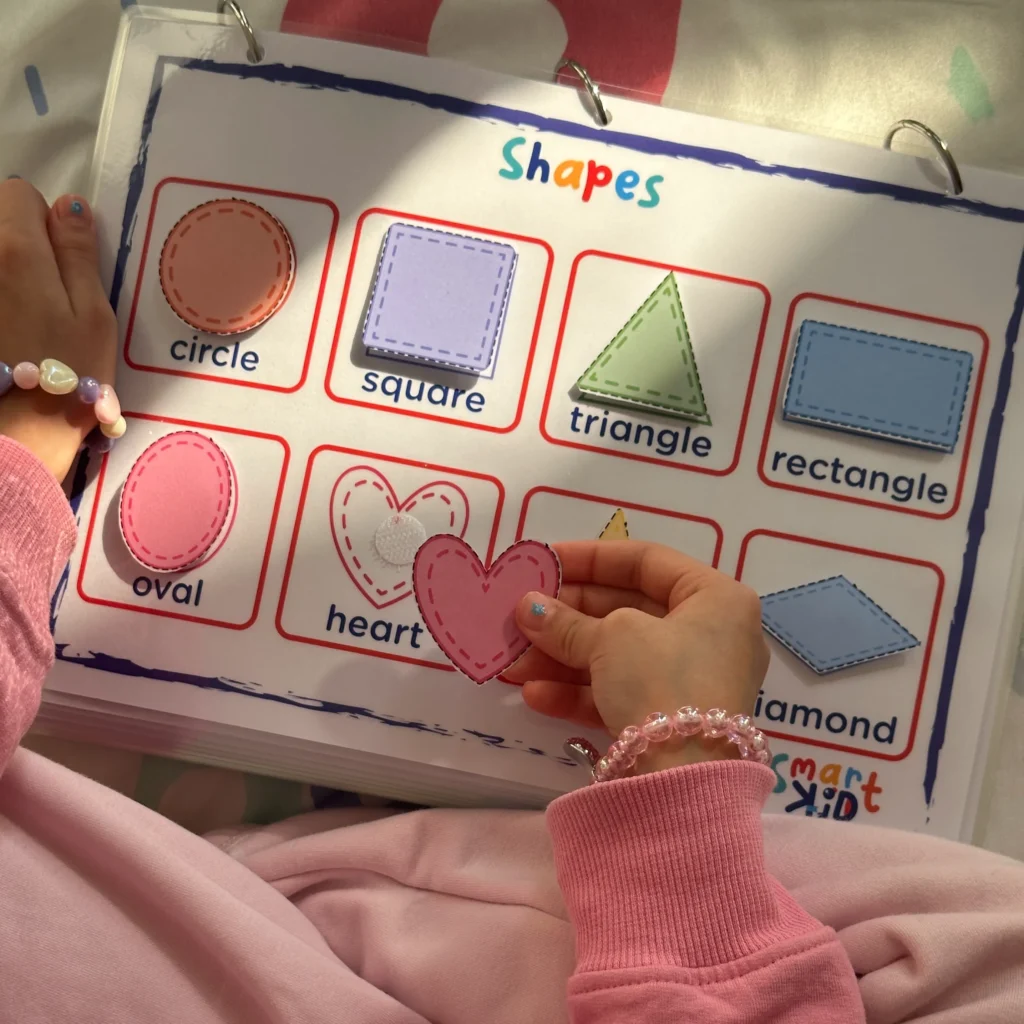
You can do an English activity with your child at home in five minutes, without a long lesson or a big word list. Pick one topic such as colours or food, and take your child through five steps: naming, finding or matching, a short question, a movement with a pencil or finger depending on readiness, then review and choice.
A short routine doesn't guarantee an immediate result, but it makes contact with the language frequent and easy to start. Use words whose pronunciation you know, use a reliable audio source for a word if you need to, and don't make full fluency a condition for playing with your child.
The five-minute routine step by step
- Minute one — Naming: show only two or three words. Say the word clearly and point to the picture or object: red, blue, yellow.
- Minute two — Finding or matching: ask your child to find something or match two pictures: Find something blue.
- Minute three — A simple question: use a question that can be answered with a word or a gesture: What color is it?
- Minute four — Tracing or movement: your child traces the word or first letter if they're ready, or draws the colour or acts out the animal with a movement.
- Minute five — Review and choice: offer two options: Red or blue? then let your child choose tomorrow's word or explain one to you.
Don't watch the clock closely if your child is absorbed, and don't stretch the session just to finish the steps. Naming may take a minute and a half, and tracing is dropped on a day when they don't want the pencil.
A complete example: colours
The words: red, blue, yellow. Use three safe objects you have at home. Say This is red then ask Show me red. After that, put out two objects and ask Red or blue?.
For a beginner, pointing is enough. For a child who knows the words, use a short sentence: The cup is blue. They can draw a line in the requested colour or match a colour card to a real object. At the end, say the words in a different order and let them pick their favourite.
A complete example: food
The words: apple, banana, milk. Use pictures or real foods at a suitable time, bearing in mind safety and food allergies. Start: This is an apple. Then Find the banana. Ask Do you like apples? and the answer can be yes, no or a gesture.
Don't turn the activity into an obligation to eat. The aim is language. For an older child, add a colour or a number: Two yellow bananas. For a younger one, settle for one or two names. Review the words while preparing a meal on another day instead of using a new sheet of paper.
A complete example: animals and body parts
For animals, pick cat, bird, fish. Match the picture to the sound or movement, then ask: Which animal can fly?. If the question is hard, say Show me the bird. For a movement activity: Move like a cat.
For body parts, use hand, nose, eyes with a game of Touch your nose. Don't introduce too many words in one round. When your child knows a word, put it in a sentence: I have two eyes.
How do we adjust the routine to your child's level?
| Approximate level | What we ask | Example |
|---|---|---|
| Hears the words for the first time | Listening and pointing between two options | Blue or red? |
| Recognises familiar words | Searching, matching and naming a word | Find the cat |
| Uses single words | A sentence of two or three words | Blue car |
| Understands short questions | Describing, choosing and a simple reason | I like apples |
Don't move on to sentences just because your child has memorised three words in one session. Repeat the words in different places, and allow them to answer in Arabic or by pointing when the goal is understanding. Then calmly give the English model again.
If you don't speak English fluently
Pick a small set you can review before the session. Listen to how the word is pronounced in a reliable audio dictionary, then use short fixed sentences. You don't need to explain a grammar rule. Instead of long talk, rely on the object, the picture and movement.
- This is … for naming.
- Show me … for pointing.
- Find … for searching.
- What is this? for questions.
- Do you like …? for preferences.
If you make a mistake, correct the word next time without embarrassment or turning the session into an exam for you. Calm consistency matters more than using lots of phrases.
Should I mix Arabic and English?
You can use Arabic to explain the rule of the activity or to reassure your child, then keep the target words in English. For example: “We'll look for the colour blue — Find blue”. Avoid translating every word immediately if your child understands it from the picture and movement; give them a chance to work it out.
To keep clear space for Arabic, you can run a separate routine such as letter of the day in Arabic instead of combining many skills in one session.
Household pictures, word cards or an activity book?
| Option | Best for | Example of use |
|---|---|---|
| Objects and pictures from home | A free start and the routine's vocabulary | Clothes colours and kitchen food |
| Organised vocabulary cards | Expanding words and sorting them by topic | Animals, body, food, home |
| Activity book | Practising matching, tracing and varied skills | A short page that can be repeated |
According to the current product pages, the My English Words Book offers more than 160 cards in 13 categories, while the English Level 1 activity book includes 19 activities, wipe-clean pages and a personalised name activity. The first focuses on organised vocabulary, the second on a variety of activity types; choose according to your goal, not just the size of the product. To compare the other options once you've decided on the goal, browse the educational books collection.
A repeatable three-day plan
| Day | Topic | Main activity | Review |
|---|---|---|---|
| First | Three colours | Naming and searching the room | Choosing a favourite colour |
| Second | Three foods | Matching a picture or a real object | yes/no for preference |
| Third | Three animals | Sound or movement, and matching | Your child explains a word to you |
The following week, repeat one topic with old words and one new word. Don't pack nine words into one review session if it confuses your child. You can also link vocabulary to an activity from the short home ideas.
Mistakes that make the five minutes harder
- Choosing ten words because the topic is fun.
- Asking for repetition after every word, many times.
- Correcting pronunciation in a way that keeps interrupting the play.
- Forcing your child to write before they're ready.
- Changing the session's topic every minute.
- Measuring progress only by the number of words they say straight away.
Ready phrases for four daily situations
Getting dressed
Pick two words such as shirt and shoes. Say Put on your shoes while pointing. On another day ask Where is your shirt?. Don't introduce the names of all the clothes in one morning; use a word when it becomes meaningful.
Tidying the toys
Use box, car, doll with Put the car in the box. Here your child learns the word, the verb and the place from a single movement. For a beginner say one or two words: Car, box.
Mealtime
Try water, spoon, plate and phrases like Here is your spoon. Avoid making language a condition for getting food; say the model, then give the item so the moment stays safe and relaxed.
Reading a picture story
Pick one picture and ask What can you see?. If they don't answer, offer two choices or say the word. Repeat the same story on another day; knowing the events helps them pay attention to the language.
How do we notice progress without a test checklist?
Watch how it's used over several days. Your child may be progressing when they point to the right word, carry out a short instruction, use a word on their own, combine two words, or correct their choice after hearing the sentence again. Write down only three words you want to repeat in the week, and record where they appeared naturally.
| Observation | What might it mean? | The next step |
|---|---|---|
| Points but doesn't speak | Understanding sometimes comes before use | Keep modelling and don't force repetition |
| Says part of the word | Tries to imitate the sound | Calmly say the whole word again |
| Uses the word in a new situation | Is starting to link it to its meaning | Add a short sentence |
| Mixes up two words | Needs more discrimination | Go back to two clear options and different pictures |
When do we change the topic and when do we repeat?
Repeat the topic if your child is still discovering the words or asks for the same game. Change the context rather than the words: the colour on a card, then in clothes, then in a toy car. Add a new word when they know the old one in more than one situation or when the activity seems easy and enjoyable.
If they get bored of the topic, move on to their current interest such as animals or vehicles, keeping one old word in the session. There's no need to formally finish the “colours unit”. The home routine is flexible, and can stop for days and then resume without making up for it.
Frequently asked questions
How many words should I offer in a session?
Start with two or three. If they're completely new, a single word used in several situations may be enough.
Must my child repeat the word?
No. Understanding can show through pointing or choosing. Pronunciation may come later after natural repetition.
Should I use writing every day?
Only if your child is ready and enjoying it. Movement, drawing and matching are suitable alternatives within the routine.
How do I review without a test?
Ask them to choose a word for a game, or to be the teacher, or to find the object at home. Reviewing within a context is easier than a list of questions.
Summary and the next choice
Name, match, ask, add movement or tracing, then review. Use My Words for organised vocabulary, or the activity book for matching, tracing and varied topics, after checking age and skill with the guide to choosing the level and language.
