

Blog, Interactive Activity Books
13 groups of basic words your child should know before kindergarten
Before starting kindergarten, your child needs enough basic vocabulary to communicate confidently with their teacher and new friends. The problem is that most mothers teach words randomly instead of covering the basic areas they actually need in their daily life.
13 core vocabulary areas for pre-kindergarten
- Feelings: happy, sad, scared, angry — so they can express themselves instead of just crying.
- Basic communication words: please, thank you, sorry, yes, no.
- Fruit and vegetables: apple, banana, carrot, tomato.
- Drinks: water, milk, juice.
- Foods: bread, rice, eggs, cheese.
- Sensory words: soft, rough, hot, cold.
- Clothes: shirt, shoe, socks.
- Places: home, garden, school.
- Household items: door, window, bed.
- Playtime: ball, doll, blocks.
- Social activities: shares, greets, says goodbye.
- Daily actions: eats, sleeps, plays, washes.
- School items: pencil, book, bag.
These are illustrative examples of the kind of words in each area, not a final list — the aim is that these areas together cover most of your child's daily situations before kindergarten.
How do you cover all these areas without chaos?
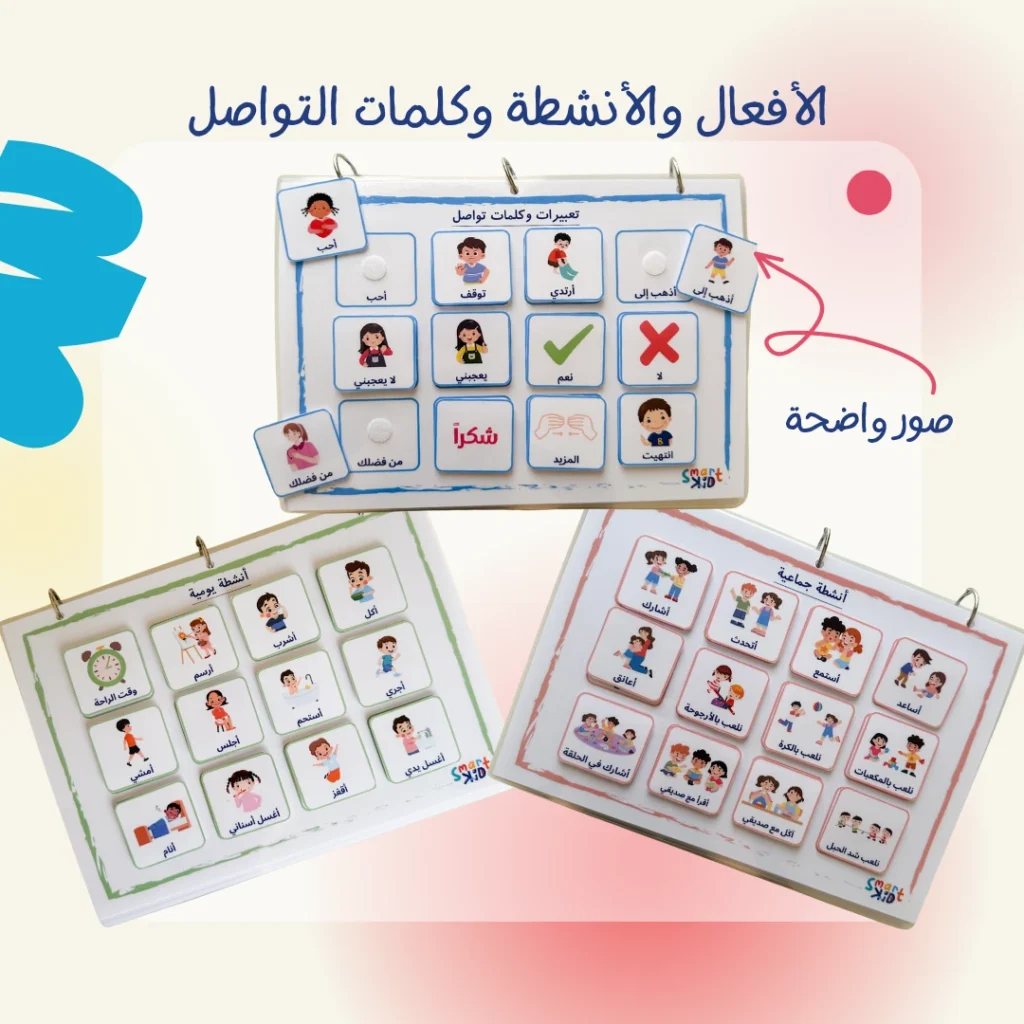
Smart Kid's My Words book organises exactly these thirteen areas into 160 removable cards in a single book, instead of separate cards that are easy to lose or repeat without order. You can focus on one area each week instead of trying to cover everything at once — see our complete guide to building vocabulary for the recommended daily method, then compare the product with other options in the interactive books collection.
Frequently asked questions
Must all thirteen areas be taught in order?
No, you can start with the area most pressing for your child (such as feelings or foods) and then move around according to their interest, with no strict order.
My child already knows some of these words; is the book still useful?
Yes, the benefit isn't only learning new words but organising them, linking them to real situations, and expanding each area with additional vocabulary.
Are these same groups available in English?
Yes, the same classification is available in the English edition of the My Words book for those who want to build vocabulary in both languages.
You may also like
