

Blog
What is an interactive book for children? A guide to understanding, choosing and using one
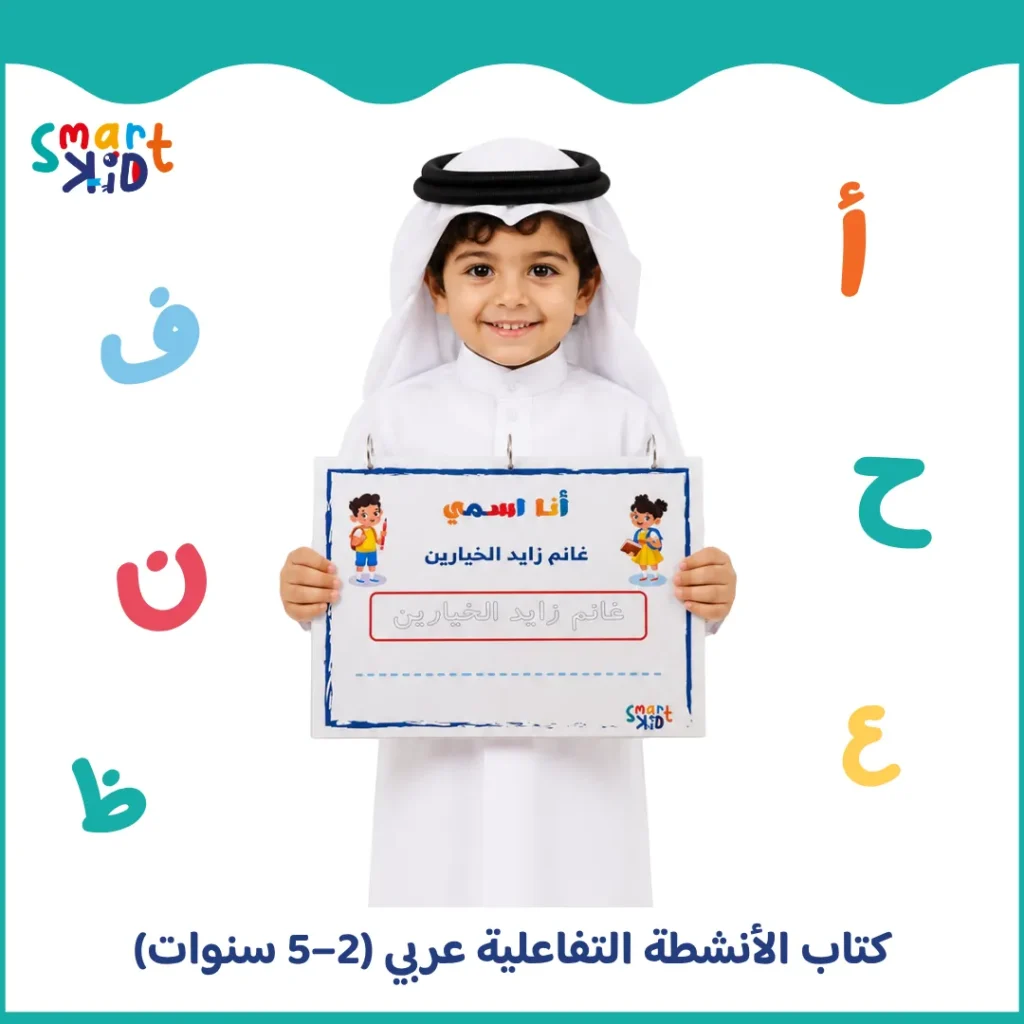
An interactive book for children is a book that asks your child to do something on the page, rather than just looking or listening. They might match two pictures, order steps, trace a path, choose an answer, or write and then try again. So its value isn't measured by how many pages your child finishes, but by the quality of participation, conversation and attempts that happen during use.
This doesn't mean the interactive book is always better than a story, a workbook or free play. Each medium has a different role. This guide helps you understand the types and differences, choose a suitable level and language, and use the book in a short session without it turning into homework or a test.
What is an interactive book for children?
It's a book built around a clear response from the child. The response may be a hand movement, a match, an arrangement, tracing with a pen, or a spoken answer. A good page doesn't only display information; it gives your child a chance to notice it, try it and come back to it.
For example, instead of a page showing colours alone, the activity may ask your child to match each colour with something of the same colour. And instead of showing the steps of a daily routine, your child may arrange the pictures from beginning to end. Here the page becomes a starting point for thinking and talking, not an end in itself.
How does it differ from the traditional book and the workbook?
The basic difference is the child's role. In an illustrated story the child follows events, listens and imagines; in a workbook they may write or colour once; while the interactive book invites them to carry out a specific task. None cancels the other; a child's library can combine them according to the goal and the situation.
| The medium | The child's role | Best use | What to watch for |
|---|---|---|---|
| A story or traditional book | Listening, looking, imagining and conversation | Language, stories and a connection with reading | Not every book needs a task or an answer |
| The paper workbook | Writing, colouring, cutting or sticking | Open-ended creativity and keeping a trace of the work | Some pages are used once |
| The interactive book | Matching, arranging, tracing or choosing | Structured practice and short sessions | The activity must suit the child's level, not only the written age |
| The practical toy | Movement, exploration and direct experience | Sensory and motor learning and independent play with suitable supervision | Safety and piece size matter more than the number of advertised skills |
How does a child use the interactive book?
Use can start by looking at the picture before touching any card or pen. The parent asks a short question such as “What do you see?” or “Where could we put this picture?”. Then your child tries, takes a small hint when needed, then explains their choice or tries again.
Your child doesn't have to carry out the task the same way every time. They may answer by pointing one day, talk on another, and use the pen when ready. Flexibility is part of good use, especially with younger children or those who don't like sitting long.
Examples of types of interactive activities
Matching and sorting
Your child matches the colour to its counterpart, the animal to its place, or the picture to the suitable category. These activities encourage observation and comparison, and can be extended with household items: after matching a colour on the page, your child looks for something of the same colour in the room.
Arranging and sequencing
Your child arranges the steps of an event or a routine, such as what happens first and then second. The aim isn't only to memorise the sequence; you can ask: “Why did you put this picture before the other?” so the activity becomes a chance to explain.
Tracing and writing
Your child traces a line, shape, number or letter. Some children begin with a finger or with big movements in the air before the pen. Full accuracy isn't the goal of the first session, and it's best if the paths are clear and graded.
Vocabulary and pictures
Your child names a picture, chooses a description, or uses a word in a short sentence. This type can support Arabic or English when the words are linked to your child's daily routine, not a long list separate from their life.
Maths and everyday concepts
Your child may link a number to a quantity, compare two shapes, or get to know time and the days of the week, depending on the book's level. Tangible things stay important: if the activity is about the number three, you can count three spoons or three blocks after the page.
What skills can the activities support?
Suitable activities can encourage attention to detail, eye-hand coordination, vocabulary, understanding sequence, practising pen control, and solving a simple task step by step. The word “support” matters here; the book isn't a developmental test, nor a substitute for movement, play, conversation, stories and daily experiences.
The benefit also differs with how it's presented. The same matching page can become a language activity when your child explains their choice, an observation activity when they search for differences, or just a moment of pressure if they're asked to finish it quickly. The quality of interaction matters more than the number of activities completed.
What's the suitable age for an interactive book?
The age printed on the product is a starting point for safety and difficulty level, but it isn't enough alone. Watch what your child can do now, what interests them, and how many steps they can follow without tension.
| Approximate stage | What we look for | A sign the activity is harder than needed |
|---|---|---|
| 2–3 years | Clear pictures, simple matching, a choice between two, short time | Long instructions or precise writing before readiness |
| 4–5 years | Sorting, vocabulary, paths, letters and numbers according to readiness | The activity depends on independent reading or many steps |
| Ages 6–8 | Language, maths and more advanced concepts with room to think | Activities whose answer they know immediately and offer no challenge, or a school level far above |
In the current Smart Kid products, Level One in Arabic or English is designed for ages 2–5 and has 19 activities in each book, while Level Two is designed for ages 6–8 and has 19 more advanced activities in each language. These ages are indicative; the final decision depends on current skills and how the family uses the book.
How does the family choose the right level?
Start with one goal, not a long list of skills. Does your child need matching and foundational concepts? Or vocabulary? Or more advanced language and maths? Then examine a sample of the activities and their instructions, not only the cover and the age.
- Choose an easier level if your child needs every step explained, leaves the page quickly, or doesn't understand what's asked even after a simple example.
- Stay at the same level if they sometimes succeed, sometimes need a hint, and ask to repeat some activities.
- Consider a higher level if most tasks have become very familiar and they complete them without thought or interest.
For a practical comparison of age, language and type of activities, see the guide to choosing the right activity book for your child in Qatar.
Arabic or English?
Choose the language the family will actually use in conversation and review. The Arabic book suits when the aim is to support letters, vocabulary and concepts in Arabic. And the English book makes sense when English is used at kindergarten or in play, or when the family wants a short routine for English vocabulary.
The dual bundle isn't automatically better because it contains two books. It's suitable when there's a realistic plan to use both languages, such as different days, or a single topic discussed in each language separately. But if the family will use one language for now, starting with one book may be clearer and less distracting.
Is being wipe-clean and reusable important?
It matters when the activity depends on tracing, writing or matching that your child wants to repeat. A wipe-clean page allows another try without needing a new copy, and may ease sensitivity to mistakes because the attempt isn't final.
But it isn't a required feature for every goal. For collage, cutting, free colouring and keeping a first piece of writing, a paper workbook may be better. When using a laminated page, use the pen suited to the product and wipe it in the recommended way, and test any new tool on a small area instead of assuming it's suitable.
Smart Kid's current activity books use heat-laminated pages that can be written on and wiped, and a marker pen comes with them. You can browse the interactive activity books category after determining the age, language and goal, not before.
A short 5–10 minute session routine
- Choose a suitable time: avoid hunger, tiredness and rushing.
- Offer two options: “Shall we start with matching or the path?” instead of opening the whole book.
- Explain in one sentence: give just one example, then leave room to try.
- Ask about their thinking: “How did you know?” or “What did you notice?” rather than settling for right and wrong.
- Stop at a good moment: one page may be enough. Put the pen and book away and agree to come back later.
What if your child refuses the activity?
Refusal doesn't mean your child is lazy or that the book isn't useful. They may be tired, may not understand what's asked, or may prefer movement at that moment. End the session without argument, and try an easier activity later or one your child chooses.
If refusal keeps happening, review the level of difficulty, the length of the instructions and the way the book is presented. You can try the idea with things from home first, then return to the page. For more scenarios and practical phrases, read the guide to using an activity book without pressure.
Common mistakes when using interactive books
- Trying to finish the largest number of pages in one session.
- Correcting every movement before your child completes their attempt.
- Choosing a higher level to give your child a “challenge” they can't understand.
- Asking for a full verbal answer when your child can take part by pointing or matching.
- Using the book instead of free play, movement and stories, rather than alongside them.
- Leaving all the tools and pages in front of your child at once.
- Carrying on after obvious tiredness or distraction appears.
When is an interactive book suitable? And when is another alternative better?
It's suitable when your child enjoys clear tasks, needs organised repetition, and the family wants a short activity that can be opened and returned to. It may be a practical option for home or travel if its parts are few and easy to organise.
Choose a story when the goal is imagination, language and a connection with reading. Choose a workbook when you want free colouring, cutting and sticking, or keeping the work. And choose a practical toy when your child needs movement and sensory exploration. In many homes a mix is better: a story, play, free paper, and a short interactive page at different times.
The summary of choosing
A good interactive book doesn't promise to teach everything, but offers your child an understandable task that suits their level and lets them take part and try. Identify the goal and the language, examine the type of activities, and start with a short session. If your child needs an alternative, choosing another medium is a practical educational decision, not a failure.
Frequently asked questions
Does my child need to read to use an interactive book?
Not always. Many picture, matching and arranging activities can be done with a parent's participation before independent reading. What matters is that the instructions suit the stage.
Is every wipe-clean book interactive?
Being wipe-clean is a feature of the material, while interaction depends on the task design and the child's role. A page may be wipe-clean but just repetitive training that doesn't suit your child's goal.
How many activities do we do in a session?
There's no fixed number. Start with one activity and watch for understanding and interest. A second activity can be added if your child asks and is still comfortable.
Does the interactive book replace play and stories?
No. It's one tool within a wider learning environment that includes conversation, movement, play, reading and daily experiences.
Next step: once you've decided on your child's age, skill and the language the family will use, compare the options in Smart Kid's interactive activity books and choose one level you can actually use, not the largest number of products.

Pingback: Using the Activity Book Without Pressure: What to Do When There Is Refusal or a Mistake
Pingback: An Educational Gift for a Kindergarten Child: Ideas by Age, Language and Interest
Pingback: Wipe-Clean Activity Book or Workbook? A Comparison of Use and Cost
Pingback: Choosing an Activity Book for Children in Qatar: Age, Language and Level