


Blog, Montessori
Skills Box: what does it offer a child from 12 months?
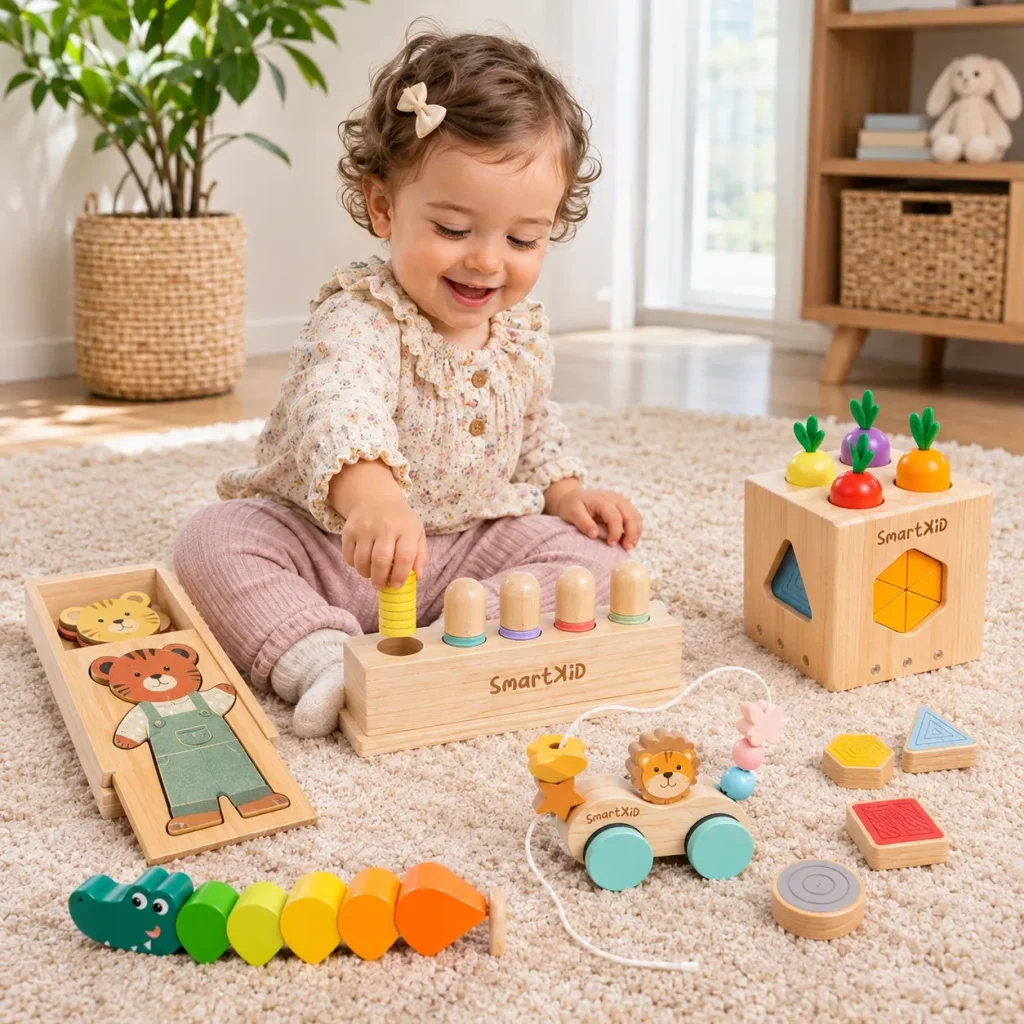
After the first birthday, play changes for many children: they are not content to watch things and shake them, they want to do something with them. They press, pull, try to put pieces in their places, and repeat the attempt. Skills Box from Smart Kid is a set of five interactive wooden toys inspired by Montessori principles, with a stated age of 12 months and above. This article does not repeat the product page; it explains how its toys can be used at home and what to notice during play.
The nature of play after age one
At this stage the child seems more eager for independence: they want to hold things themselves, try in their own way, and may refuse help. The suitable toy here gives them something to do with their hands and see the result clearly: a piece going in, a cart moving, or a piece popping up.
Children's abilities vary a lot, so do not judge a toy from the first session. Your child may ignore it today and return to it after a week. For more about this stage, see Montessori toys for ages one to one and a half.
The five toys and how to present them
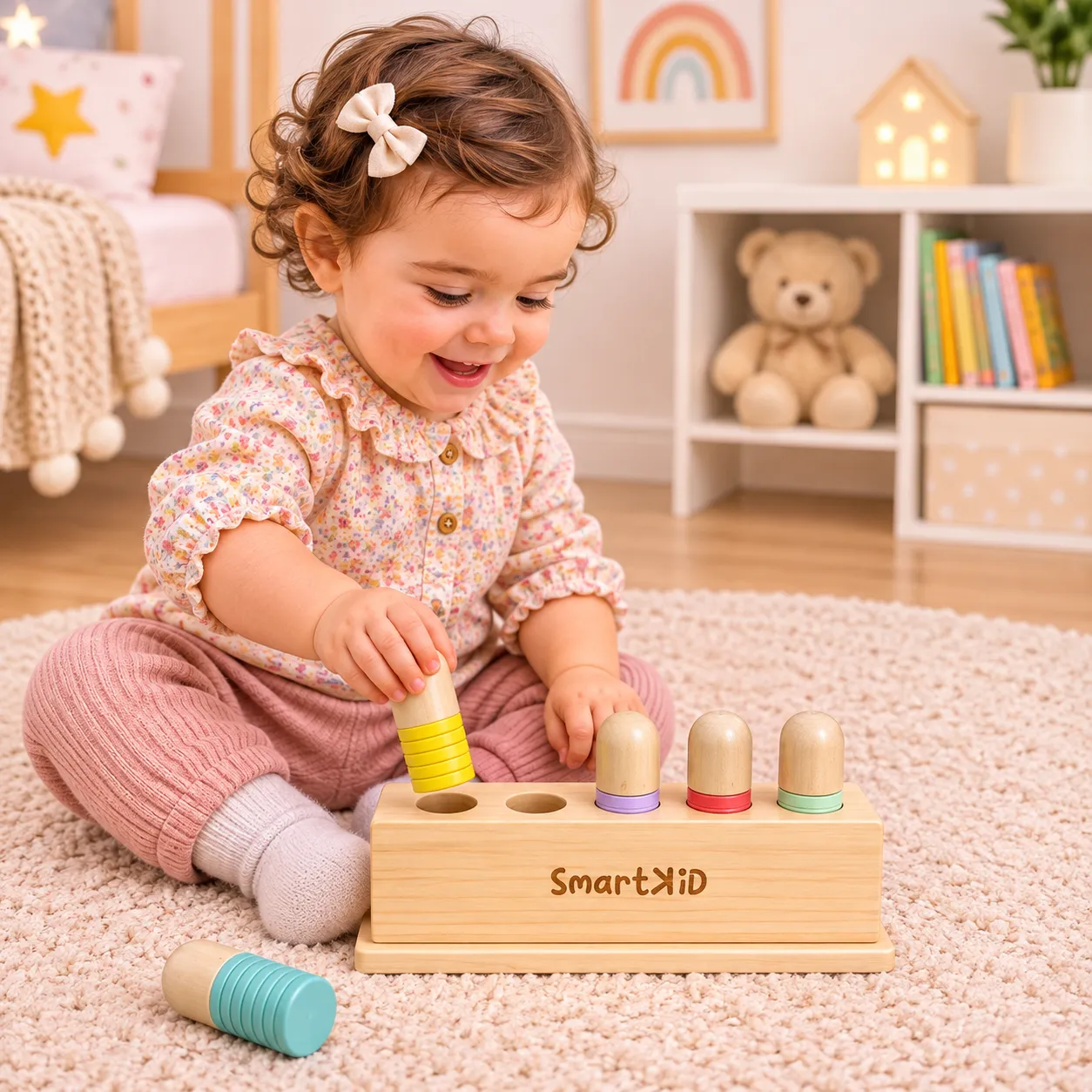
The pop-up pressing toy
Five colorful pieces that shoot upward when pressed. The child discovers that their movement makes a result, and may like to repeat pressing many times. Start by showing the pressing on one piece, then let them try the rest.
The carrot and shapes cube
A wooden cube for placing colorful carrots and inserting geometric shapes into the matching openings. Here the child tries matching: which piece goes into which opening? They may need several attempts, so do not rush to put the piece in place for them.
The pull-along cart
A wooden cart with a pull string and a lion figure, with a curved track of beads and moving pieces. It is a movement toy: the child pulls the cart and watches it follow, and moves the beads along the track.
The crocodile threading toy
A wooden crocodile with color-graded parts; the child passes the string through them and arranges them to form its body. Your child may start by moving the pieces and exploring them before trying to thread the string, and that is fine; you can help with the first step.
The bear and clothes puzzle
A wooden puzzle with animal characters and interchangeable parts, with which the child assembles the characters and changes their clothes. It lets them notice differences between the pieces and match them.
You can find the full description of the toys on the Skills Box.
What do you notice during play?
- Repetition: If the child repeats the same movement, that is normal, and it may be part of learning how the toy works.
- Trying and adjusting: Notice whether they change their approach after the first attempt does not work.
- Interest: Which toy do they return to most? You can present it first in coming sessions.
- Frustration: If they start to fuss, simplify the activity: reduce the pieces, show the movement again, or end the session and come back later.
A practical way to present the box
- Choose one toy per session, and do not take out all five toys together.
- Put it in front of them on a rug or low table, and remove distractions.
- Show the movement once without much talking.
- Step back a little and watch, intervening only if they ask for help or seem frustrated.
- When they finish, encourage them to put the toy back in its place as far as they can.
The toys are used under adult supervision, especially with small pieces, string and beads.
Which toy do you start with?
There is no fixed order. If your child likes movement, start with the cart; if they like to see a quick result, start with the pop-up toy; and if they enjoy putting things in their places, try the carrot cube. The crocodile and the puzzle may suit a time when they are calm and ready for longer focus.
Between the Skills Box and others
If your child is not yet used to inserting and matching, the Discover Box stated from 6 months may be a gentler starting point. And if they like sounds and tapping, they may enjoy the Musical Ball Box – Smart Kid. To compare the four, see How to choose a toy box suitable for your child's age, and to see the progression between stages, read From Discovery to Skills.
A typical session with one toy
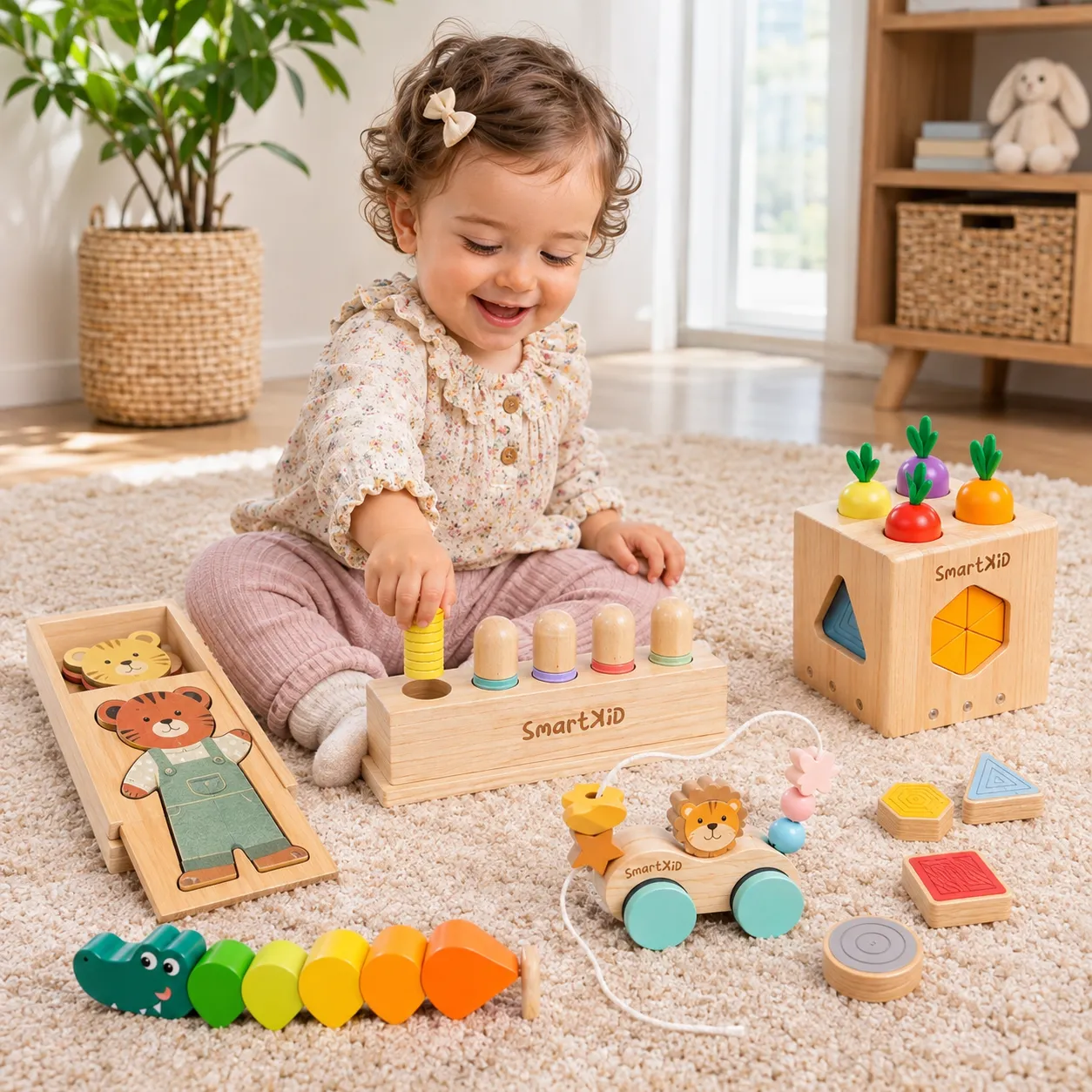
Suppose you chose the carrot and shapes cube. Put it on a rug in front of your child and take out the carrots only. Take one out and put it back slowly, then let them try. After they become interested in the carrots, you can show the shape pieces and their openings. And if it seems complicated, stick with the carrots today.
This method applies to the other toys: start with a simple part, then add a small challenge.
How does play differ with five different toys?
Each toy has a different kind of movement: pressing in the pop-up toy, inserting and matching in the carrot cube, pulling in the cart, threading in the crocodile, and assembling and swapping in the puzzle. This variety lets you choose an activity that suits your child's mood: if they are energetic, the cart or pressing; if they are calm, the puzzle or the crocodile.
When the attempt does not go as you expect
- If the child rejects the toy, bring it back after a few days and do not insist.
- If they try to put a piece in the wrong opening, gently show them once and let them try again.
- If they throw the pieces, that is part of exploring for many children; redirect them calmly and show the correct movement.
- If the crocodile or the puzzle seems hard, postpone them and come back to them later.
Rotating toys through the week
You can show two toys per week and hide the rest. For example: the cart and the carrot cube in the first week, then the pop-up toy with the bear puzzle in the second week. This keeps each toy new in their eyes and avoids crowding the space. You will find ideas for organizing the place in the home learning corner for children.
Frequently asked questions
What is the suitable age for the Skills Box?
The age stated on the product page is 12 months and above, and the toys are used under adult supervision.
How many toys should I present in one session?
One toy is usually enough, then switch in another session. Taking out all five toys together may increase distraction.
What if my child is not interested in a particular toy?
Do not pressure them. Put it back in the box and present it after a few days, or start with the toy they prefer and then try others.
Does the child sit for a long time with the box?
Not necessarily. Short, repeated sessions suit many children at this age better than one long session.
Summary
Play after age one is based on trying and repetition. You can look at the Skills Box to see the five toys inside it and compare its activities with what your child does today, and browse the Montessori toy boxes category if you want to compare the other options.

Pingback: How toys progress for a child in the first two years: from Discovery to Skills