

Blog, Montessori
Educational toys from 6 to 12 months: how to choose simple toys suitable for the stage?
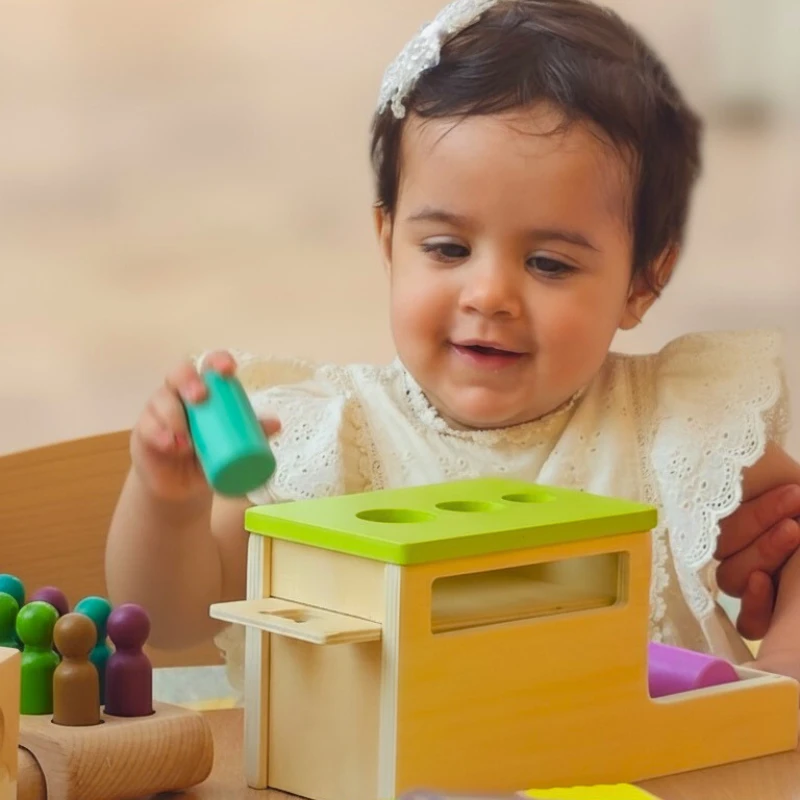
Between the sixth month and the first year your child changes quickly: they sit, grasp, pass things from hand to hand, and may begin to crawl or stand. With these changes, choosing toys becomes a recurring question: what really suits them? This article gives you simple criteria for choosing educational toys between 6 and 12 months, whether you buy them or use household items.
What do we mean by an "educational" toy at this age?
At this stage "educational" does not mean letters or numbers. A useful toy is one that invites the child to experiment: to grasp, move, listen, see the result, then repeat. In other words, learning here happens through play with the hands and senses, and the simpler and clearer the toy, the better able the child is to understand it.
Six criteria for choosing a toy
- A clear result for their movement: a sound, a spin, a drop, or a motion. This helps them link their action to what happens.
- A size that suits their hand: pieces that are easy to hold and have no small parts that come off.
- A material that withstands mouthing and cleaning: children at this age put many things in their mouths, and this is an expected part of exploring.
- One idea: a toy that focuses on one activity is easier for the child than one crowded with buttons.
- Repeatability: can they repeat the activity without you having to rearrange everything?
- Simple progression: a toy they can start with easily and then try more with over time.
And avoid play that depends on a screen or continuous loud sounds. If you want to explore this point further, read Montessori toys or screens?.
What changes between 6 and 9 months?
In this period sitting becomes steadier and the hands are freed for play. The child may bang things together, pass them between their hands, and follow what moves. Toys that are held, shaken, rolled and pulled suit them. More details in Montessori toys for 6-9 months.
And what changes between 9 and 12 months?
Finger movement becomes more precise in many children, and they begin to understand that something falls or disappears and then returns. Here they may like dropping, inserting and retrieving toys. For details, see Montessori toys for 9-12 months.
Simple toys from home
You do not always need to buy something. A child can discover a lot with safe, large items: a wide wooden spoon, a soft cloth box, a fabric ball and a silicone ring. What matters is that the items are clean and large enough not to be swallowed, and that your child stays within your sight.
Buying helps when a toy adds something that is hard to provide at home: durability, graded sizes, or a clear idea. We discussed this in our guide to Montessori toys by age.
Where do Smart Kid's boxes come in?
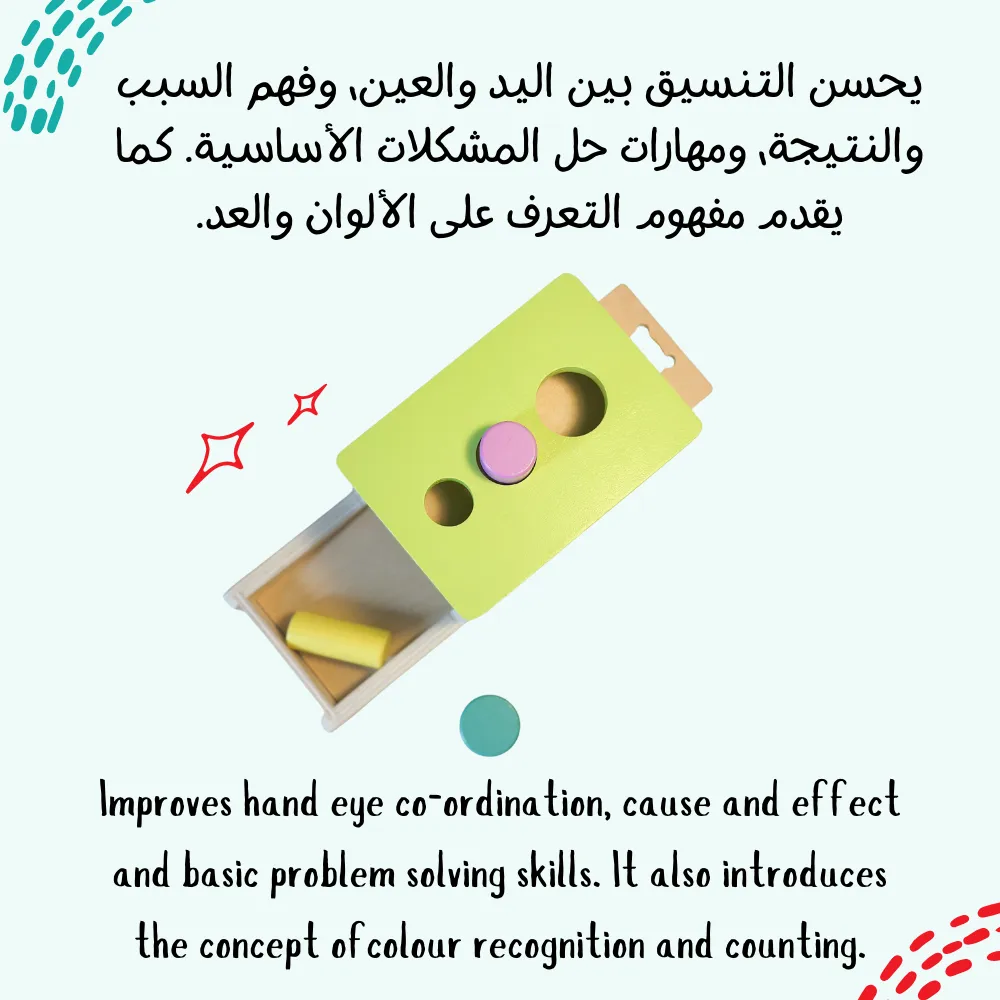
If you decide to buy, there are two options stated for this stage from 6 months: Discover Box which has five sensory and interactive toys, andCylinder Drop Box which is a single toy for inserting, dropping and retrieving. The first suits those who want variety, and the second suits those who want one simple activity. Neither is a condition for you to start; what matters is that your choice fits your child's interest.
How many toys do you present?
Keep what is shown to the child small: two or three toys are enough. Then swap from time to time. Big piles of toys may make them touch everything without settling on an activity. You will find ideas for organizing the space in the home learning corner for children.
Signs that a toy is suitable
- They reach for it by themselves.
- They return to it after you put it away.
- They repeat the same movement and seem comfortable.
- They finish the session without crying or distress.
And if you notice the opposite, do not worry; perhaps they need another time or a simpler toy. Remember that every child has their own pace, and if you have a real concern about your child's development, consult your pediatrician.
A simple play routine through the day
- After waking: a short time with one toy on the rug.
- After eating: a calm activity close to you.
- Before sleep: avoid stimulating toys, and make the time for a story or quiet.
You do not need a strict schedule. What matters is that play moments are frequent, short and screen-free, and that you play with them when you can. Your presence beside them helps them keep going.
Common mistakes when choosing toys
- Relying on loud sounds and lights: they may excite the child more than they benefit them.
- Buying many similar toys: vary their function instead of repeating it.
- Neglecting safety: check toys regularly for loose parts.
- Comparing the child with others: every child has their own pace.
Safety first
Toys for this age are always used under adult supervision. Check that parts do not come off, that edges are smooth, and that the toys are clean. And do not rely on the printed number alone; if a toy contains small parts, make sure it fits your child's age and play style.
What about gifts?
If you are choosing a gift for a child at this age, ask the family what they already have, and prefer one clear toy over a large set. You will find extra criteria in Educational gift guide by age.
Frequently asked questions
What is the best toy for a 6-month-old?
There is no single toy that suits all children. Look for a simple toy with a clear result, a size that fits their hand and a safe material, and watch what attracts them.
How many toys should I offer my child at this age?
Two or three within reach are usually enough, swapping them every few days according to their interest.
Does the child have to sit with the toy for a long time?
No. Short, repeated sessions suit this age better; end the session when they start to get bored.
Do I need to buy special toys?
Not necessarily. Safe household items may be enough, and ready-made toys are useful when they add durability or a clear idea.
Summary
Choose a simple toy with a clear result, present it calmly, and watch your child. And if you want to compare the contents of a ready-made box with your child's stage, you can look at the Discover Box or read Discover Box: toys and activities for a child from 6 months. And to see the sequence of toys after age one, read From Discovery to Skills.
